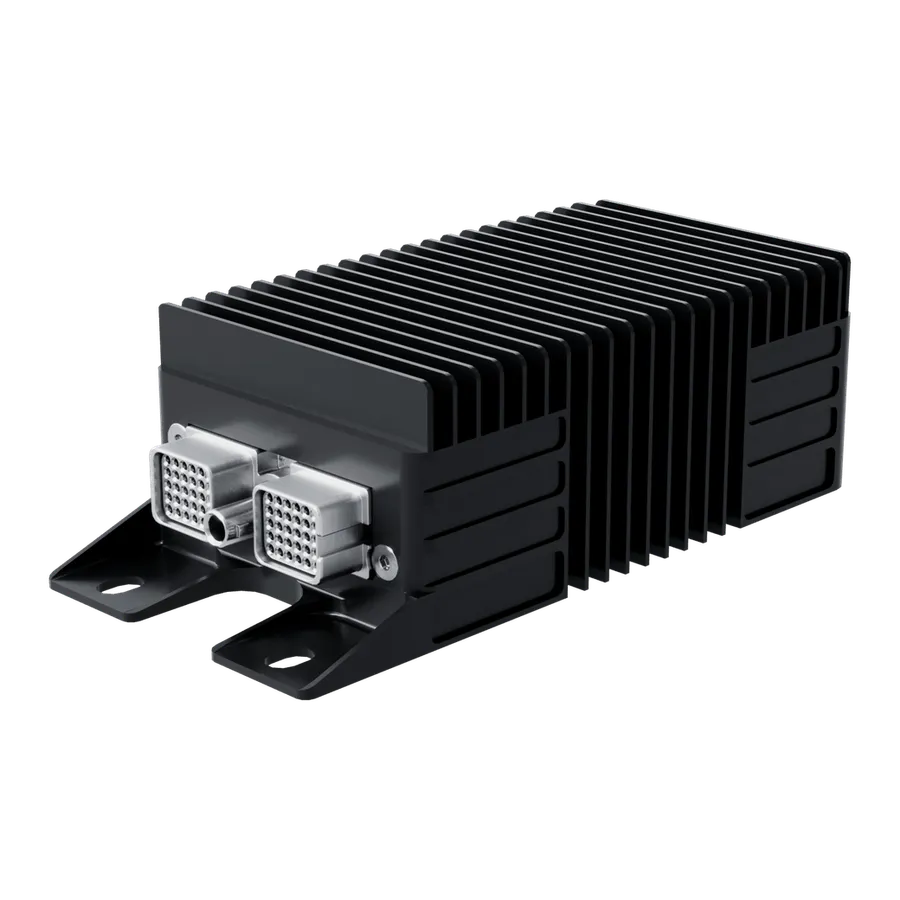
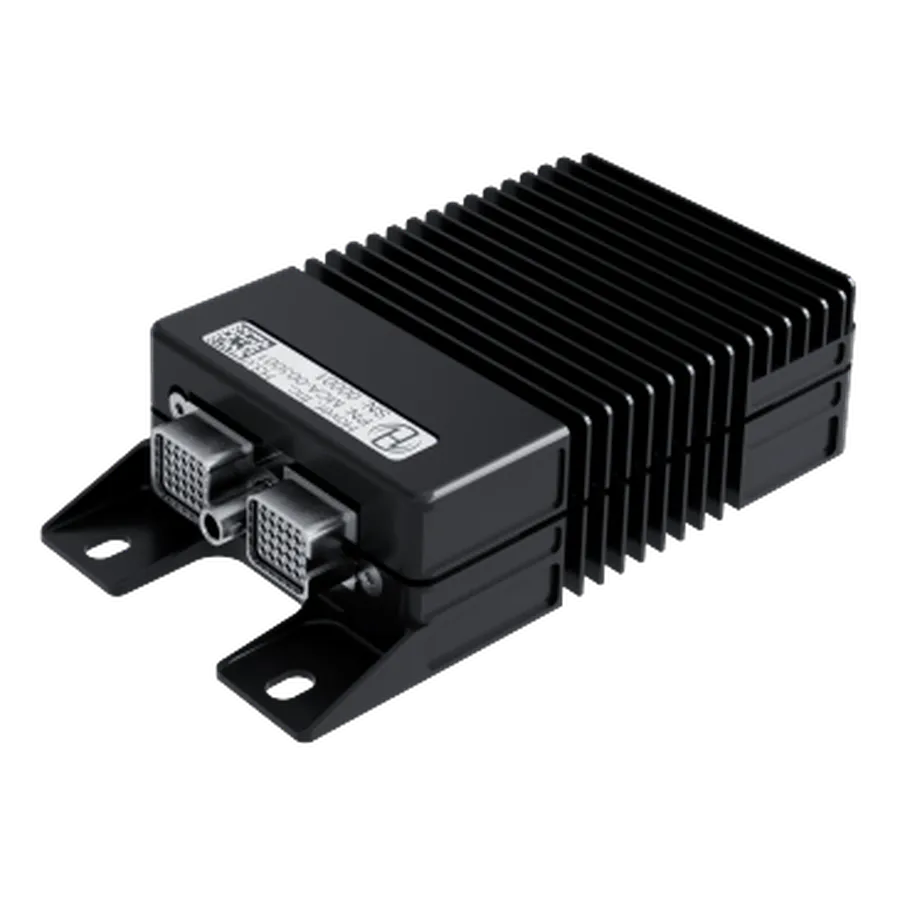
H1.X Computer
For applications that require redundancy
Designed to DO-178C and DO-254 Level A, with separate power supplies and processing on each channel.
- Architecture
- Dual channel
- Mass
- 650 g
- Power
- 20 W maximum
- Isolation
- Galvanically isolated

A family of low Size, Weight, and Power (SWaP) IMA computers authorized under TSO-C153a, with software developed to DO-178C and hardware to DO-254 at Development Assurance Level (DAL) A, environmental qualification to DO-160G, and the DO-297 data required to integrate them.
For applications that require redundancy
Designed to DO-178C and DO-254 Level A, with separate power supplies and processing on each channel.
For applications that do not require redundancy
The memory capacity and throughput to execute next-generation Detect and Avoid (DAA) algorithms.
For data concentrator and battery or fuel cell management applications
Built for distributed systems where quantity and Size, Weight, and Power (SWaP) sensitivity are high.
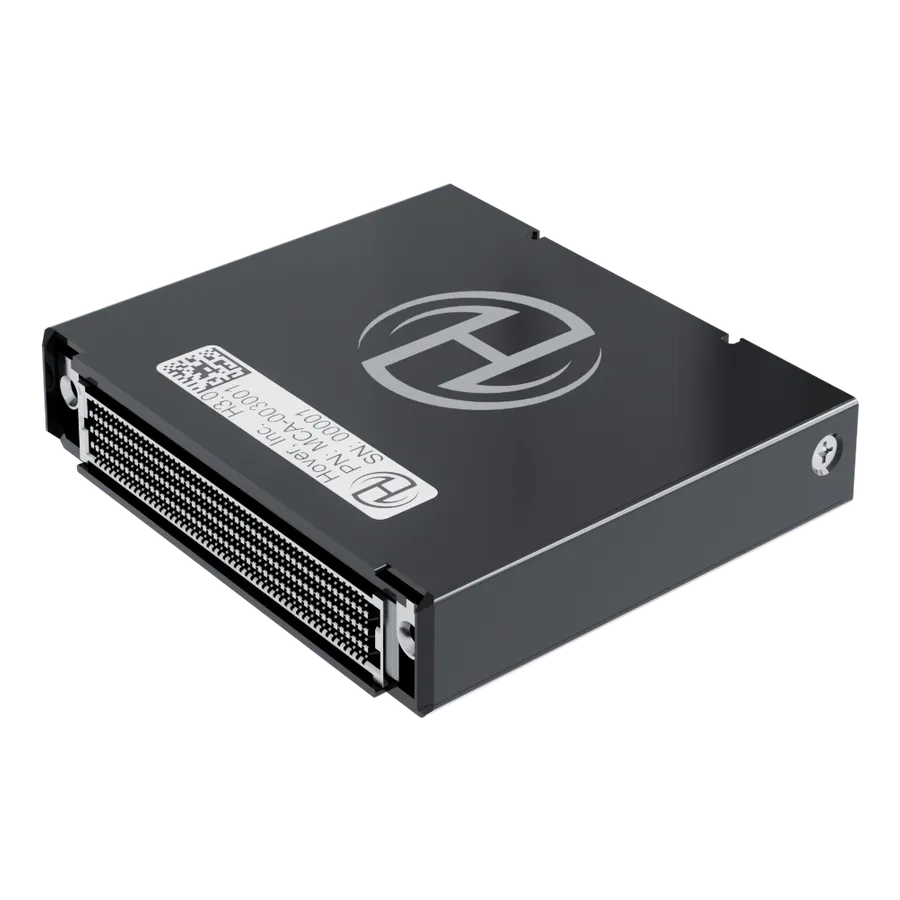
For Modular Open Systems Approach (MOSA) flight and mission computing applications
A VNX+ (VITA 90) module compatible with every VNX+ chassis and every H-series main processing board.
| Specification | H1.X | H2.X | H3.X | H4.X |
|---|---|---|---|---|
| Architecture | Dual channel | Single channel | Single channel | Single channel |
| Mass | 650 g | 350 g | 250 g | 200 g |
| Power | 20 W maximum | 10 W maximum | 8 W maximum | 8 W maximum |
| Isolation | Galvanically isolated | Galvanically isolated | Non-isolated | Non-isolated |
| Dimensions | 110 × 105 × 65 mm | 110 × 55 × 45 mm | 110 × 60 × 30 mm | 89 × 78 × 19 mm |
| Ethernet | 3 × 1 GbE per channel (6 total), IEEE 802.1 TSN | 3 × 1 GbE, IEEE 802.1 TSN | 2 × 1 GbE, IEEE 802.1 TSN | 2 × 1 GbE, IEEE 802.1 TSN |
| Typical applications | Cockpit display computer, Flight computer, Powertrain and motor controller | Autoflight computer, Detect and Avoid computer, Mission computer | Battery management, Data concentrator, Fuel cell management, Powertrain controller | MOSA flight computer, MOSA mission computer |
Specifications are typical values and subject to change. Contact us for the controlled datasheet before committing to a design.
In a federated architecture, every aircraft function has its own computer. IMA replaces them with shared computing platforms, each hosting several functions of different criticality. Fewer computers means less weight, wiring, and power, and lower maintenance cost.
TSO-C153a is the Federal Aviation Administration (FAA) Technical Standard Order (TSO) for IMA platforms and modules. The H1.X, H2.X, and H3.X computers, with the Hover Real-Time Operating System (H-RTOS), are IMA platforms, and the H4.X is a VNX+ IMA module, all authorized under TSO-C153a. Each hosted function is approved through its own TSO authorization, type certificate, or supplemental type certificate.
Read moreRead more: TSO-C153a authorizationRTCA DO-297 divides the certification process for IMA systems into six incremental acceptance tasks. Applicants receive Task 1 module acceptance credit for the IMA platform, so they concentrate on their own software applications and aircraft integration.
Read moreRead more: DO-297 incremental acceptanceThe H-series computers are supplied with H-RTOS, the Hover Software Development Kit (H-SDK), and the Hover Data Loader (H-DL). Hardware, software, and tools share a single TSO-C153a baseline, so there is no third-party integration gap to close and no separate baseline to maintain.
Read moreRead more: A single vendor, a single baselineIMA was first used on transport aircraft, with cabinets of modules hosting functions across the aircraft. The H-series brings IMA to aircraft where SWaP is tightly constrained, including electric Vertical Takeoff and Landing (eVTOL) aircraft and defense platforms.
Read moreRead more: ApplicabilitySummarize your requirements, including SWaP budget and certifiable aircraft type. Our engineering team will contact you shortly.